

Easy DIY SEO Tips For Food Bloggers
Food blogging is one of the most competitive niches on Google. Here are some useful tips to help you rank your recipes and articles.
A no nonsense guide to SEO copywriting
Top By Myriam Jessier•
Are you tasked with vague directives of improving the SEO of your content? Here is a concrete guide to help you figure it all out.

SEO copywriting is all about creating content that is captivating, persuasive, and easy to read. It also helps to increase rankings for content on all major search engines.Writers need to understand what information humans seek as well as how bots work when processing and evaluating content.
SEO encompasses all activities undertaken to improve organic traffic to a website. The three key pillars of SEO are code, content, and links.
Ensuring your site ranks as high as possible in the search engine result pages (SERPs) takes time, expertise, and talent. A website’s text should be relevant, easy-to-read, and tweaked to meet the demands of search engines.
SEO copywriting is writing information that Google understands while meeting the user intent to promote interactions, linking, and sharing of the provided information. SEO copywriting integrates keyword-optimized content to serve both the search algorithms and organic search.
On average, people read 25% slower on screens. Developing content that aligns with such dynamics improves and appeals to user experience (UX). Here are a few nuggets to writing high-quality text:
The short answer is YES, SEO content writing is an absolute must to bring in qualified traffic. Search engine algorithms have evolved beyond keyword density. You won’t be rewarded by stuffing keywords in articles. Google is more intelligent than ever and that means more high-quality content is rewarded by better search engine rankings. Digital marketing is more challenging than ever. You’ll rarely see spammy titles and descriptions in Google results anymore.
SEO content aims to increase visibility in search engines and to increase organic traffic. Copywriting and sales copy, the end goal is to convert that traffic into leads and sales. Without SEO copywriting, your content may not rank or the traffic you attract isn’t qualified and won’t convert into buyers. The goal of SEO Copywriting is to strike a balance between search engine and the end user perspective.
Excellent SEO copywriting combines passion and infinite ability to learn, adapt and keep up with the dynamics of Google algorithms.
SEO copywriting is focused on valuable informational content. From a user’s perspective, this means providing content that matches their search intent in the proper format. The same unwanted rehashed marketing speech everyone delivers online won’t cut it. Provide great insights and information to boost your online visibility and conversions.
Always hold user intent as a guiding principle in copywriting.
One of the key elements of SEO copywriting is to start by breaking down the user intent. Then, you can conduct keyword research, which aims to gather a list of keywords that humans use to express their intent. Your keyword strategy is basically a list of relevant keywords in your niche or industry. Each piece of content should have a focus keyword, also called a primary keyword.
Developing content that appeals to readers and fully optimized is a tough balancing act. Failure to implement a proper SEO copywriting process means an inability to rank and difficulties converting site visitors into potential customers. Still doubtful of the impact of SEO copywriting? Read the Moz case study on optimization that led to 32% increase in organic traffic boost. Let’s go over some actionable tips that you can implement:
Your content should always clearly state how you answer a need or a question. Then, you should make sure you showcase that you are providing the best solution to the person’s search query and finally, lead them to the action you want them to take. This call-to-action should be framed as the next logical step in the journey. Provide clear calls to action to tell folks what they should be doing. Make your intentions clear. If you use “Click Here”, you need to rethink your approach. Use phrases that describe why people should click and what awaits them.
Telling the person what you want them to do is only part of your job. Depending on the business and offer, the action you want them to take can vary. Here is a brief list of action words to help you craft a CTA that includes the next step you expect prospective customers to take:
Sometimes, content marketing forgets that its primary goals are to generate leads, not organic rankings. Determine your primary and secondary keywords but do not allow the drive to optimize your content right away to clog the flow of your content. If you cannot coherently read the content out loud to someone else and have it make sense, you should lay off the optimization and focus on crafting content for engagement.
Focus on relevant terms, not overly competitive keywords. This should guide your whole writing process. Rather than crafting content nobody wants, create content your audience is actively looking for. To quote John Muller from the Google Search Liaison team: “Pro tip: pick the niche you want to be active in thoughtfully. Do you want to compete with *everyone* else?”
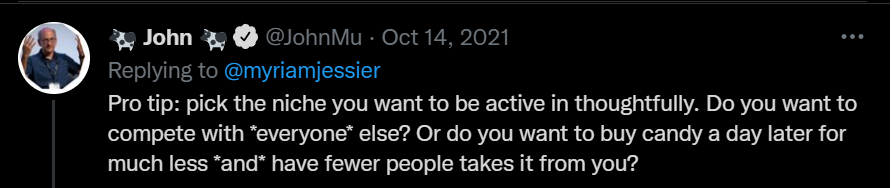
source : https://twitter.com/myriamjessier/status/1448620011925422083
A single search intent can be expressed in a variety of ways. For example, if someone is looking for a beach that accepts dogs in Quebec, this could mean multiple queries for the same type of content:
You need to pick your niches and figure out alternative keywords that are more long-tail as they will bring in organic traffic instead of fighting to gain visibility on head terms that are super competitive for which you have little chance of being ranked.
Steal this journalist technique if you want to optimize your content for humans and search engines. Google’s bot was created to imitate human behavior. It places more emphasis on content that humans would pay more attention to. The notion of the inverted pyramid used by journalist means making sure the most important points of the text loaded at the start of content pieces.
Semantically speaking, the first 2 or 3 sentences of a text are the most important ones and hold a greater weight in terms of SEO. Most humans will place emphasis on the beginning of a text to determine if it is worth reading. Robots that crawl your website place a greater importance on these sentences to replicate human behavior.
Another important element that should deliver the most informative value are your main title (H1) and subtitles (H2, H3 tags).
A great way to ensure you product relevant content is to have proper content structure. SEO copywriting doesn’t depend on hitting the word count. Don’t just wing it! Spend reasonable time conducting research on what’s ranking, the recurring subheadings, and understanding new trends and insights on a topic. Combined, these helps greatly improve your content. Having a content outline refines the writing process further and keeps one grounded on the relevant issues. Frase is a great tool to enable you to determine outlines based on what already ranks well in SERPs. SEMRush also has a writing assistant you can rely on.
The main selling point of a product, a service or simply online content should be your starting point. The search engine result pages (SERPs) provide a hint on the content angle. Aligning your content with the types of content you see favored in organic rankings is a way to improve your relevance great such a paradigm further improves your relevance for a search term. For example, a quick check shows that the query ‘how to play chess’ shows an emphasis on beginners. Angles or search intents can be informational, local, visual, video, branded, etc.
Simply put, search engines look for the most relevant and useful result on the first page. Google wants to offer its visitors the best answer to their query by addressing all the key areas readers are curious about and expect to see.
For example, a simple search on ‘SEO copywriting’ brings about SERPs with unique topics such as how to learn SEO copywriting and definitive guides. You can see some top-ranking pages by Brian Dean, Heather Lloyd-Martin and a few other specialists in this domain. These folks offer comprehensive guides so we inferred that our content format should be long form and highly useful.
Also look out for SERP Features such as PAA (People Also Ask) box to further increase the utility of your content. We included many of the pertinent questions that aligned with the keyword intent clearly displayed in the results.
Get ahead by learning, not copying, from the best in your niche.
Internal links, external links, link, link, link! Linking as an important ranking factor in Google’s eyes. If you need to know more, Google has a beginner’s guide into how search rankings work. A study of over one billion pages by Ahrefs established a clear correlation between links and organic traffic. Linking validates your site’s depth on top of pushing overall rankings. Make sure your provide incoming links to other content on the site you are writing for and that your new content has a few links coming from other pages in the site.
Here’s the formula in one sentence: focus on the problem, agitate and offer a solution. Identify the problem your audience has, explain it in terms that resonates with your readers and offer a solution to said problem. The formula is key in pulling your readers to the content.
Here’s an example:
PROBLEM: Finding a hotel that accepts dog can be stressful.
AGITATE: Hunting down all your options is difficult, the dog filter on travel websites is not accurate, policies change, prices vary.
And all of this when travel restrictions are constantly changing? Mission impossible!
SOLVE: It’s not impossible, bringfido.com helps you find a dog-friendly hotel in a few clicks.
Did you know that 50% of the US population read below the 8th grade level?
Now you know. The Washington Post article highlights this reality.
This means that using complex language in writing probably pushes half of your target audience away. In SEO terms, this affects conversion rates, click through rates (CTR) and link sharing. Ernest Hemingway offered a writing roadmap; use simple words and phrases, a tight prose and uncomplicated syntax. You can use Hemingway app to help you achieve this writing style faster. It’s free and helps you ensure your content is more readable.
Have you found yourself binge watching on Netflix?
Film producers build continuous curiosity to an extent that the audience cannot have enough of it. These are known as cliffhangers. The same applies to SEO copywriting. Keep your audience glued and connected to the content without comprising on quality and relevance.
Make them want more and spend time on your site!
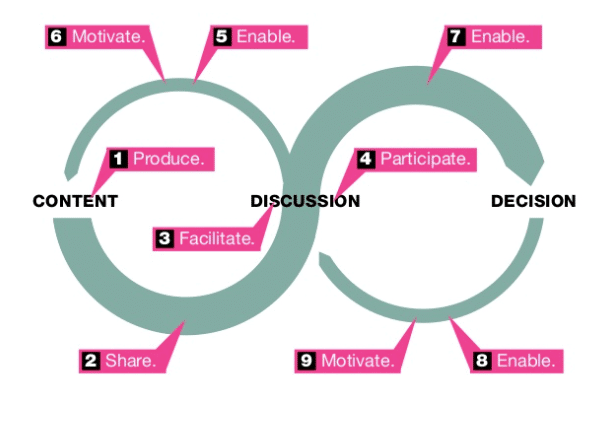
Source: Miikka Leinonen (Slideshare)
Optimize the title tags as they are the headlines in the search results.
A recommended title tag includes:
As a copywriter remember to include sensationalism, brand name-dropping, power words, numbers and percentages to captivate your audience from the onset. It’s a click-through-rate business, and organic traffic is the ultimate goal.
Spin your content following Neil Patel’s advice here.
Follow the above tips and…
Stories are an effective way to connect with the audience. Research indicates that when people read, hear or watch a story, neural activity increases five-fold, and triggers production of oxytocin (the empathy drug). Empathy allows people to simulate their conditions to other people’s situation. Create a persona that harnesses these feelings, and offer solutions to their concerns and desires. Stories help make an optimized article read more naturally and memorable. Invoke as much feelings as possible to stretch the odds of capturing a reader’s attention.
Imagine you want to buy a smartphone. Visualize on the journey you undertake for such a process, and put it in words. Aspects such as pricing, affordability, and availability are likely to dominate the query. Integrate the same paradigm by focusing on the voice of customer. Thoroughly figure out the voice of customer and apply it in the content angle, keyword research and storytelling. Look at this superb piece to understand the power of voice of customer and its value in guiding SEO copywriting.
Personally, I have fallen short at times. This type of copywriting is a valuable skill that develops over time. Don’t worry, you will eventually get there.
Here are a few pitfalls to avoid.
As a parting gift, here are a few tricks to help you in your SEO copywriting journey. Everyone wants hacks, tips and tricks. Let’s give the people what they seek!
SEO copywriting is enjoyable but requires deliberate effort to drive traffic, increase engagements and convert. Nobody reads a garbage piece – no matter its ranking.
Hoping this piece sets you off on a fulfilling SEO copywriting journey.
About the author
Myriam Jessier
SEO & GEO Consultant, Advisor to Pragm
Myriam Jessier co-founded Pragm and stepped back from the day-to-day team a few years ago. They now act as Pragm's GEO consultant and SEO strategist, advising the agency from outside.
Food blogging is one of the most competitive niches on Google. Here are some useful tips to help you rank your recipes and articles.

If you want a job in SEO, it's possible with some hard work and a little ingenuity. You don't always need agency experience.