

How do I alt text a product image in my Shopify store?
Alt texts provide a description of the content of an image for search engines and website readers. They are great for ecommerce SEO.
How to write a title and meta description in Shopify
Top By Myriam Jessier•
Here's how to include your keywords in the meta description so the text in search results and stands out and gets people clicking.

To optimize your ecommerce on Shopify, you must start by taking care of the tags that are displayed in Google. Articles about SEO often talk about meta titles and meta descriptions. Today, we will explain clearly what they are and how to take advantage of them when you have an online store.
Title and description tags are your minimum content plan for all pages
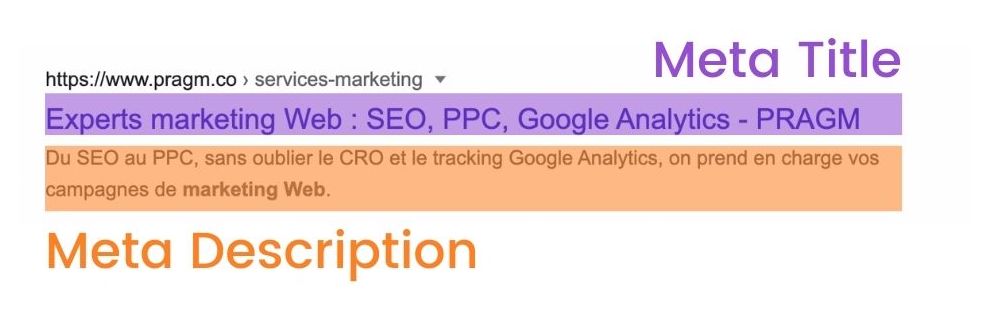
Example of a Meta title and a Meta description
Here’s an example of what a meta title and a meta description look like.
Let’s say you have exactly what a user is looking for in Google. Well, you still have to convince them to click through to your store! This is why all the important pages of your store must have a good title and description for Google.
Start with writing a meta title and a meta description for these pages:
You’re right, terminology can be confusing. A meta title tag is the field that is used by search engines as the title in their results. On the other hand, the title field in a product page is what is used as H1, the main title of your page and the one that is visible for the readers on your website.
The answer is yes. Many people do this to save time. But if your H1 title is too long or too short for the search engines, it may not show up properly in the search results.
You can find the meta tags at the end of each page in Shopify. There will be a dedicated block for these SEO elements that you can fill in.
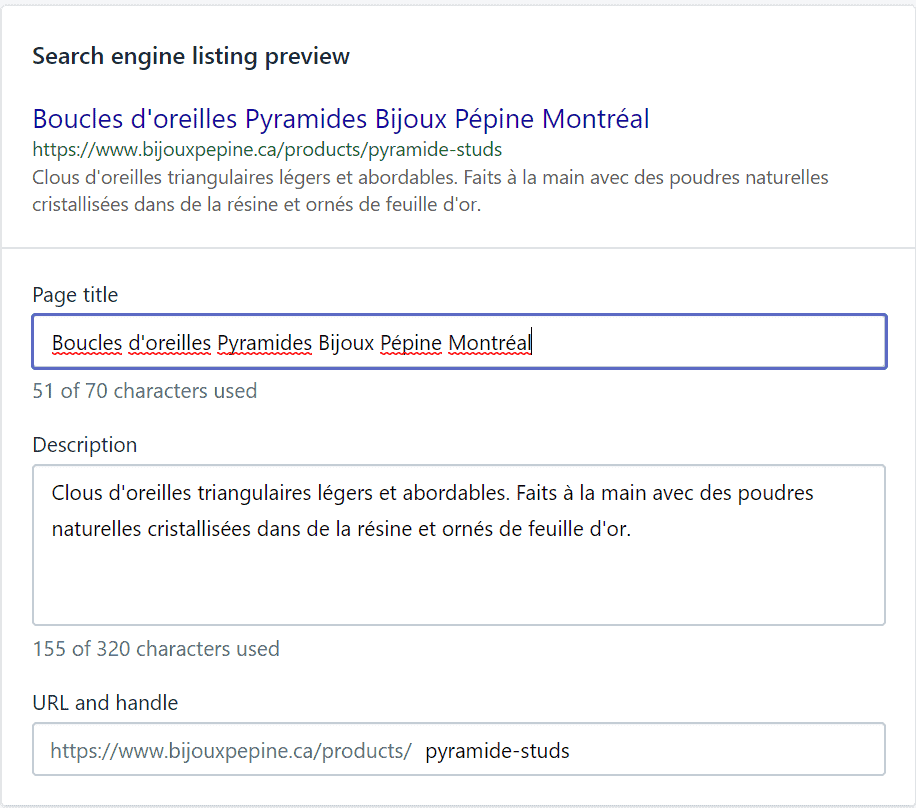
Tags are at the bottom in Shopify
The best practices for creating good meta descriptions are very similar to those for writing great ad copy. Use researched and targeted keywords in your meta descriptions:
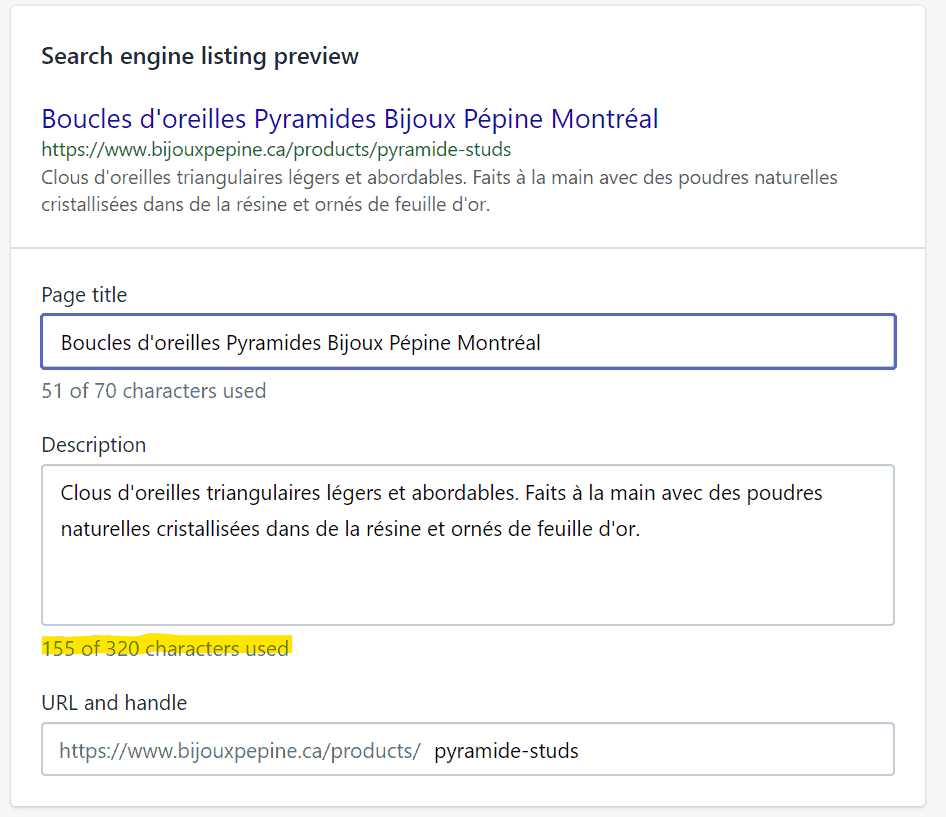
Be careful with the 300 characters limit in Shopify. It’s not up to Google strandards.
You have to be very careful with the limit in Shopify because it is not up to Google standards.You should not rely on it.
Google’s criteria are around 155 characters for the majority of the results. The length of the meta description displayed also depends on the type of device (mobile, tablet, etc). Meta descriptions are naturally shorter on mobile, so always write your descriptions keeping in mind that you must convince in 155 characters and less.
However, this doesn’t mean that you need to write very short meta descriptions, because then you will give very little information to the searcher about why your page answers their query.
Search engines like Google may also decide that your meta description is not suitable for the user’s query and it will generate theirs (which doesn’t really appeal most of the time).
I consider writing meta descriptions to be a legitimate exercise in ecommerce copywriting. Our goal should be to persuade Google visitors to click - without falling into clickbait. Here’s how you can write clear, useful meta descriptions that stand out to potential customers.
First, think about the following:
The keywords in your meta description that match the user’s query will be highlighted in bold, which will catch the eye and make your search result stand out.
This is an important differentiator in a very competitive market. Why should a searcher click on your web page (or website) and not one of your competitors? Be honest about why you’re the best choice.
Communicating the essence of your brand in less than 160 characters is a fine art. Your brand tone helps you stand out in the jungle of search engine results. Like any writing effort, a good meta description can give a sense of your brand’s personality.
If your brand message answers the question “Why us?”, marketing answers the question “Why now?”. How will this page or product satisfy the potential customer’s search intent?
Share your promotions, your sales, your added value and the unique assets that your store offers.
You are advised to present your store and the brand or brands you sell. Other relevant elements are the type of products you sell and your location.
About the author
Myriam Jessier
SEO & GEO Consultant, Advisor to Pragm
Myriam Jessier co-founded Pragm and stepped back from the day-to-day team a few years ago. They now act as Pragm's GEO consultant and SEO strategist, advising the agency from outside.