

CLS : deep dive into one of the core web vital metrics
This is something from the technical SEO side of things: cumulative layout shift is a metric to help you figure out how visually stable your page is.
How to improve EAT on your website
Top By Myriam Jessier•
Google wants to be as certain as possible that they are recommending sites that display a high level of expertise, authority, and trustworthiness.

E-A-T is an SEO acronym for “Expertise, Authoritativeness, Trustworthiness.”
We talk about expertise, authority and credibility. These criteria determine the relevance of your content and your entire website. E-A-T is in the evaluation guide that the human Quality Raters of Google use to determine the quality of a site.
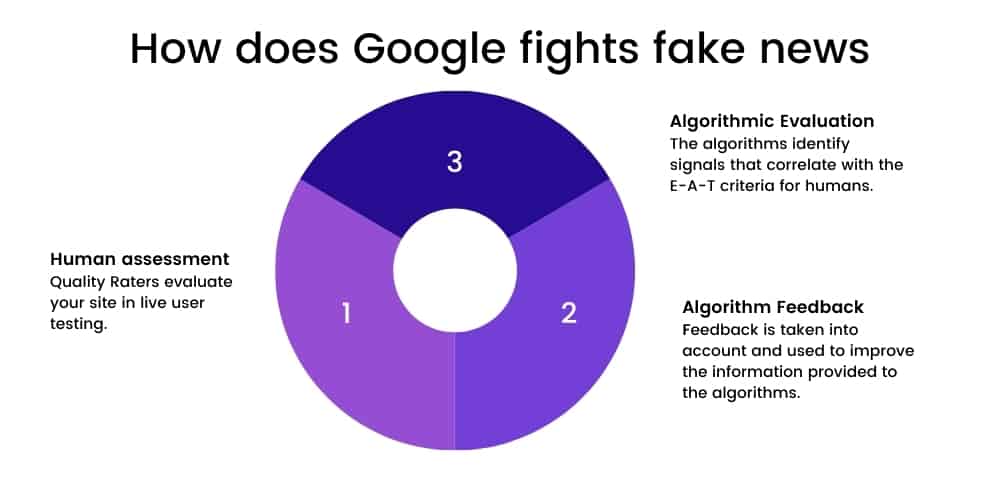
E-A-T guidelines help fight fake news online
To rank well in the results, you need to know what you’re talking about. Google believes you should be an expert in your field. Expert content is relevant and addresses a topic in a clear and comprehensive manner.
If you have a site that is medical, in finance, or otherwise addresses legal topics, veracity (citing relevant sources), freshness (last updated or published date), and relevance are essential.
This is valid for other types of sites but the standards are less strict than for the 3 domains mentioned.
Remember: the author must be an expert in his/her field.
We are talking about popularity. Are you known on the internet? Your popularity can be developed through conferences, videos, articles or other channels. Your site must receive links from authority sites, influential in your field. Links are a way for Google to get to know your reputation as a brand.
This criteria aims at security and trust. Here are the elements taken into account:
Chrome reports all HTTP pages as “not secure”, so any site without an SSL certificate has little chance of getting a good EAT score. There is no official EAT score provided by Google to website owners.
You can also read the official Google document online.
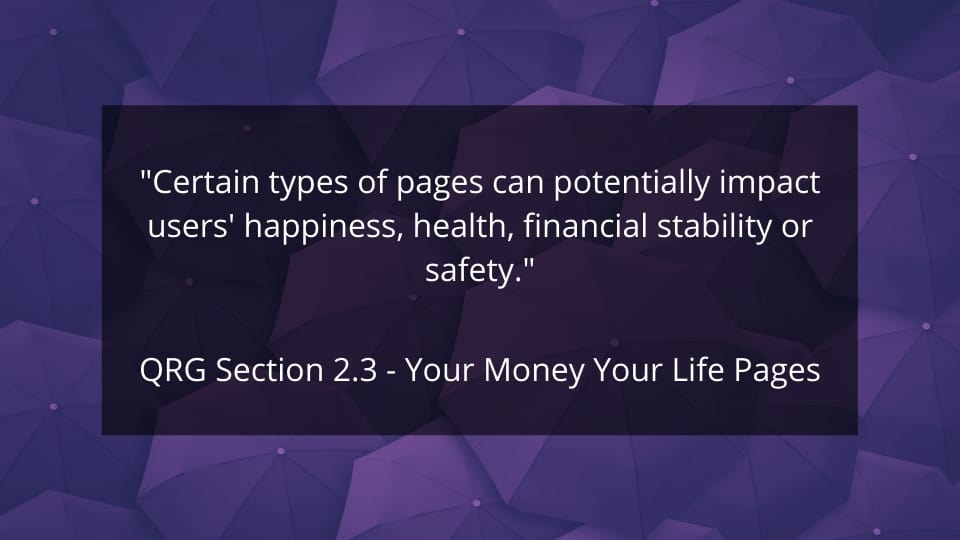
According to Google, pages or topics can be considered YMYL (your money, your life) if they “can potentially impact a person’s future happiness, health, financial stability, or safety.” Many sites fall into this category: medical, legal, financial, news and political sites, etc.
Your Money Your Life pages are pages that impact users’ future happiness, health, financial stability or safety. This is how Google defines “critical” pages that are reviewed under stricter criteria. This is something very important to Google testers. This also overlaps with the author’s biography. If the level of expertise of the content author is not clearly communicated, there is going to be a problem for pages of a “medical” nature, “financial” or any other topics in the YMYL category.
It takes time and skilled resources to produce quality content. However, there are some techniques to show Google your legitimacy without spending thousands.
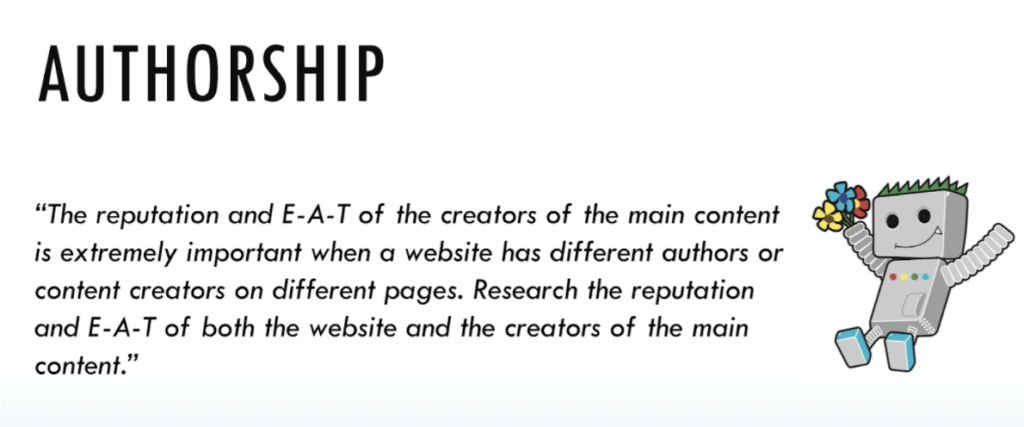
It is very important for Google to know who is in charge of a website. For e-commerce sites, support and contact information must be easy to find. For blog posts, you need information about the author.
“For some topics, the most expert sources of information are ordinary people who share their life experiences on personal blogs, forums, journals, discussions, etc.”
For content creators, biographical information and other sources that are not created by the person or organization are needed. This is outlined in section 2.6.4 of the guide. The biographies in the author blocks and the about page should be enhanced to meet this requirement.
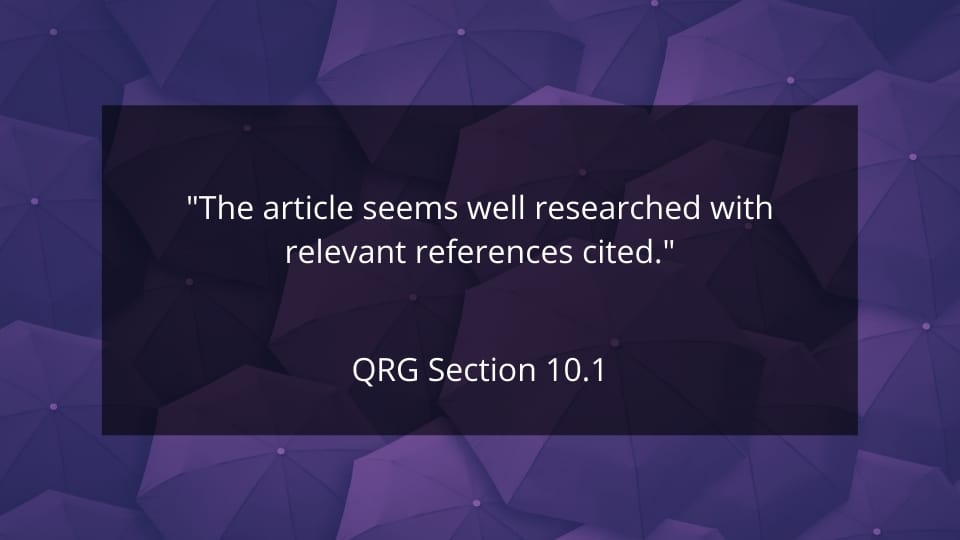
L’article est bien recherché avec des référence appropriées citées - QRG Section 10.1
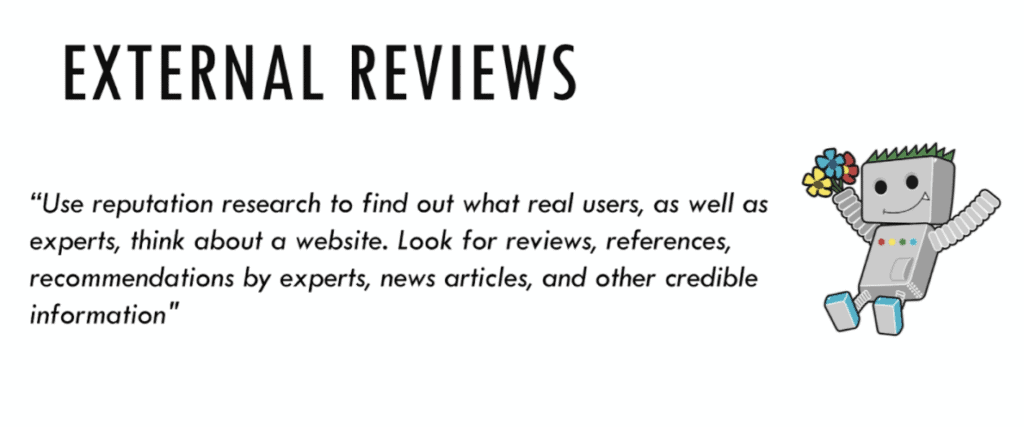
Google asks its Quality Raters to look at online reputation information rather than trusting brand content exclusively. It is essential to ensure that you maintain a good brand image. Section 2.6.4 of Google’s E-A-T guide outlines how to find out about an organization’s reputation:
Therefore, you need to perform a reputation analysis to understand what real users as well as experts think about this website. Section 2.6.1 involves searching your brand in Google.
For some niche topics, it is sometimes very difficult to find a qualified author, but this is not a necessity. The community can indeed play an important role by commenting and encouraging discussion within the page itself. The content will then be considerably enriched.
If the pages don’t have useful and relevant content expected in a recipe page, it’s going to be problematic. Google also looks to see if reviews and comments are present as both of these elements are trustworthy to them.
Section 6.5 makes it clear that web content should be rated as “LOW” in quality if the creator of the content or the website publishing it has a slightly negative reputation.
“High quality UGC is GREAT for your site. Crack down on low quality UGC instead of getting rid of it altogether” #defcon1 - Gary Illyes
Google loves user-generated content: “Do you know quality comments can be a signal of a healthy website?” - Gary Illyes. Reviews, comments, forum topics are very well seen by Google when they are relevant.
Google will consider a forum “spammy” if the content is not relevant. If you have comments that advertise Viagra or just want to promote a website, this can be held against you. If your forum turns into a torrent movie download den, this will certainly be held against you.
All pages on the web are created with a purpose in mind. Sites that are put up with the purpose of harming users, misleading them or making money in a dishonest way will be rated poorly by Google. Sometimes, there are false positives. It is therefore necessary to know how to show a white coat with an ultra relevant content.
Google expects ads to be seen on a site. However, if pages have so many ads that they distract or interrupt the user’s browsing experience on the page, the page will be given a “low-quality rating.”
Each page belongs to a website. Google must be able to establish quickly and clearly who, which company, which NPO, etc. is responsible for the website.
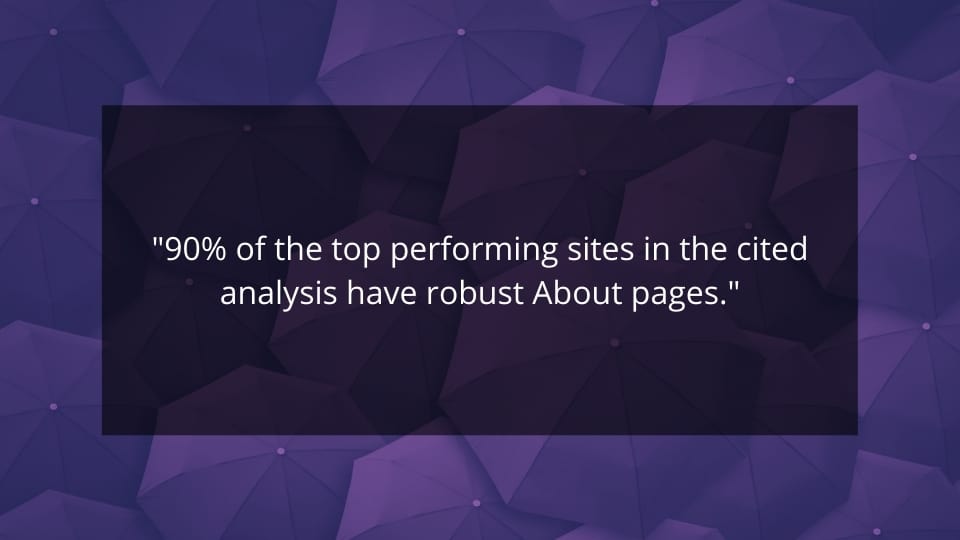
“90% of high-performing sites in the analysis cited in the sources have robust “about” pages.
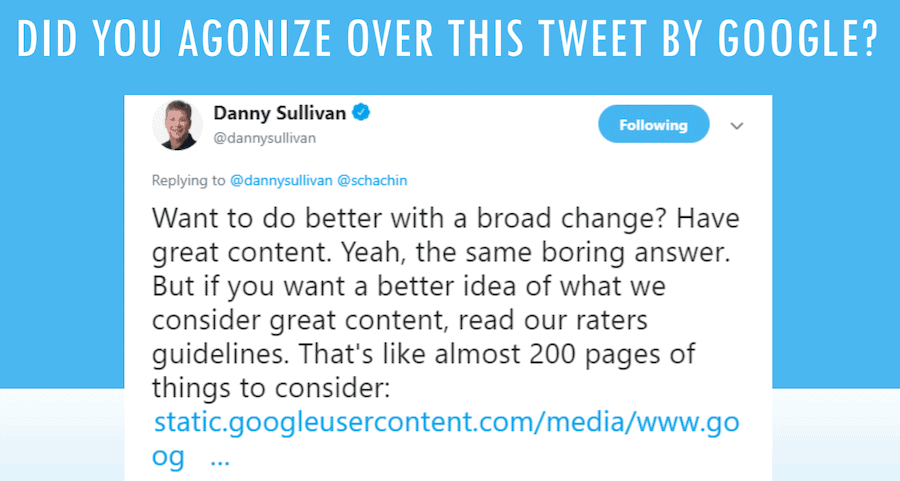
“You can view the rater guidelines as where we want the search algorithm to go. They don’t tell you how the algorithm is ranking results, but they fundamentally show what the algorithm should do.” - Ben Gomes, VP Search, Assistant & News at Google.
Ultimately, the E-A-T guidelines discussed here are an indication of where Google wants to go algorithmically. For now, the search engine needs the help of humans to control the quality of content and fight misinformation online. So, you need to consider all aspects regarding expertise, reputation and trust to ensure you produce content that will rank well in the results pages.
Sources :
About the author
Myriam Jessier
SEO & GEO Consultant, Advisor to Pragm
Myriam Jessier co-founded Pragm and stepped back from the day-to-day team a few years ago. They now act as Pragm's GEO consultant and SEO strategist, advising the agency from outside.
This is something from the technical SEO side of things: cumulative layout shift is a metric to help you figure out how visually stable your page is.

Google doesn't want to show pages that share uneducated advice. Here's how to write an optimized about page to improve EAT.